The 7 Best Highlights to See in Harbin
Nicknamed the “Ice City”, Harbin is the capital of the Northern province of Heilongjiang in a region formerly known as Manchuria. The city of Harbin has become a central hub of Northeast China and an area that has received vast influence from surrounding cultures and historic conquerors. Evidence of this can be seen in the noticeably Russian architecture, nearby Korean cultures and darker reminders of former Japanese colonisation.
As the city’s nickname would suggest, the city is best known for when the weather seemingly turns for the worse and sub-zero temperatures dominate the region for months on end. The people of Harbin have taken this in their stride, turning a negative into a positive by taking the ice and cold by the balls and making it work for them. It’s a city that holds more than one title for “the world’s largest…”, which includes the highest number of nationally protected animals, but also holds one of the biggest festivals of its kind in the world.
So, in that case, here is the list of the top things to see in the city of Harbin.
This article may contain affiliate links, which I may receive compensation for at no extra cost to you, dear readers!
Table of Contents
Ice and Snow World

This is an annual festival held in Harbin during the winter months (late December to early March), in line with the Spring Festival. This particular festival is considered absolutely unmissable and one-of-a-kind. Not only is it a must-see in the Northeast of China, but the entire world. Attracting over 18 million visitors annually, the festival, established in 1999, has now become the biggest of its kind throughout the world, and arguably the best.
Within the festival, monstrous buildings and structures of epic proportions are constructed entirely from ice collected from the Songhua River, which runs through Harbin. These include the likes of famous landmarks, castles, churches, palaces and even a post office. Some of these are even functional buildings, while others you’re able to explore via exquisite ice staircases. It’s truly hard to fathom how they were created.
Undoubtedly, the festival is best witnessed when the sun goes down. This is when the LED lights crafted into the structures are illuminated and beam with fabulous neon colours. The lights have the spectacular effect of reflecting through the crystal-clear ice, making it seem like one big enormous neon light straight off a bar wall.
The public will even be lucky enough to explore within and atop some of these miraculous structures. This would include climbing to the top of an ice palace before descending to the bottom via an ice-crafted slide. Alternatively, you could walk through the arches of an ice cathedral or attempt to use the ice vending machine (which sadly doesn’t work).
Amongst the spectacular examples of ice art, there are many other things to take your interest in. Such as areas to ice-skate, horse-drawn sledges, stages with regular performances, a 4D experience, ice mazes and various other winter-related activities for the whole family.
Jile Temple

Noted as an important cultural heritage site, Jile Temple is known as one of the most important Buddhist temples in all of China. A place of real significance, as this is the heart of North-Eastern Buddhism, being the province’s biggest temple.
Within you’ll find a generous selection of beautifully and colourfully designed gates and halls built in accordance with traditional Chinese Buddhist style. Each hall is put in order of priority, starting with the Heavenly King Hall and extending to the Hall of Mahavira, the Hall of Three Saints, Scriptures-storing Tower and Chanting Hall.
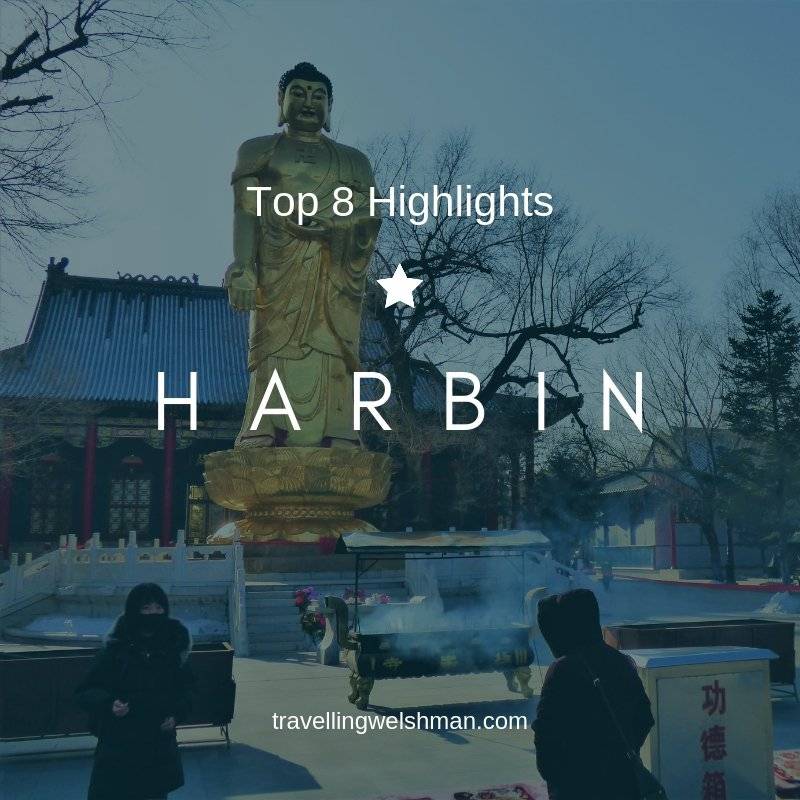
This also includes a spectacular selection of carefully designed high-stacked pagodas and figures which surround the courtyard. However, the most dominating image is found in the centre of the area; an enormous golden Buddha stood over-watching the courtyard.

The extensive guide to travelling to Heilongjiang’s capital, Harbin
Highlights, Transportation, Accommodation, Geography and Cuisine.
Sun Island

This is an island famous amongst the Chinese after a hit 80s song that brought it to the public’s attention. It’s famed for its natural beauty and cultural attractions found across the 10,000-acre park. Placed in the middle of the mighty Songhua River, there are more than 20 scenic spots across the island.
The island can be divided into 3 sections. The northern end has the wildlife, with some residents being red-crowned cranes, deer and squirrels that roam the area. The centre is where the lakes and surrounding flowers are found, along with various snow art (time-dependent). The southern end has some galleries and museums, as well as the old Russian quarter.
The island lives different lives depending on the time of year. During the winter months, the island takes part in the Ice and Snow Festival, where the festival originally started. A section of the park will be dedicated to displays of ice and snow sculptures, along with more hands-on activities such as ice-skating and snow slides.
The summer months are when the park will burst into life, when the banks of the island become a natural river beach. Within the island, there will be paddle boats on the lakes and even a small amusement park. This is also when the numerous museums in the park will be in full swing. These include the Sun Island Museum of Art, North China Fine Arts Museum, Yu Zhixue Museum of Art and Russian art galleries.
Saint Sophia Cathedral

Along with the constant visitors and the odd helpfully translated signs, Saint Sophia’s Cathedral is the clearest indication of a historically strong Russian influence in the city of Harbin. Built in 1907, this stands as the largest Orthodox Church in the Far East. This significant cultural relic stands as evidence for the city earning the nickname “Little Moscow” among its constant Russian visitors.
The structure was originally built from timber; however, following years of damage and restoration has developed into the extravagantly beautiful work of art we see today. These days, sadly, the cathedral is wedged between the ever-developing landscape of department stores and high-rise buildings.
Japanese Germ Warfare Experimental Base
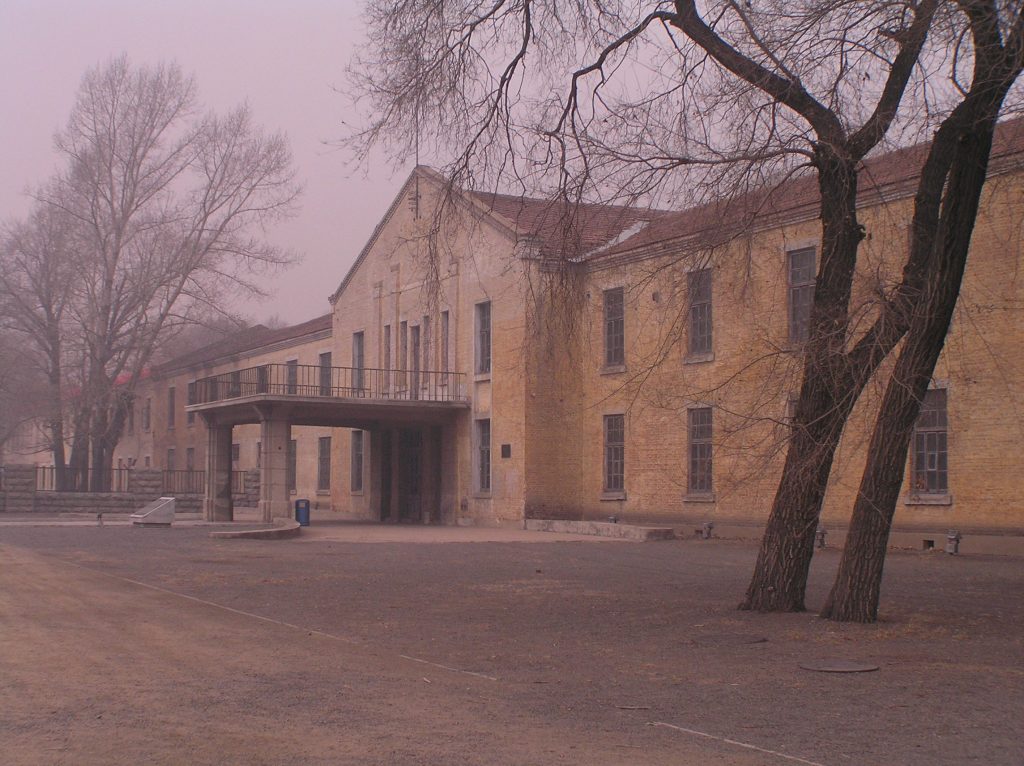
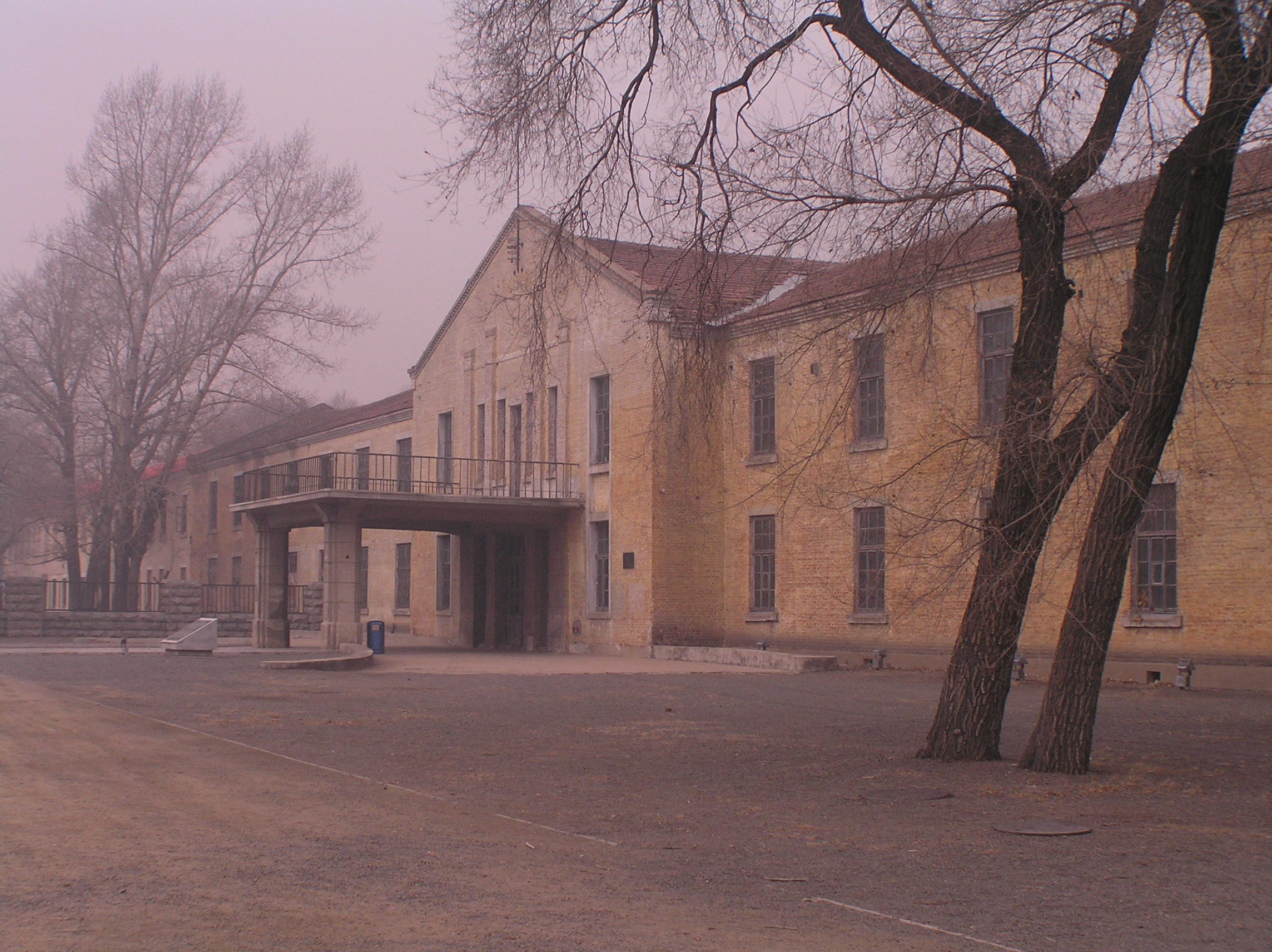
This place is evidence of the little-talked-about atrocities that occurred during the Second World War. Most people are probably unaware that, after Russia and Germany, China had the biggest number of deaths. That was the result of the Japanese invasion of what was then known as Manchuria. During which the Japanese committed particularly cruel and immoral acts of war. One very particular example of that cruelty was at this place.
At this site, approximately 3000-4000 prisoners from not only China, but also other allied nations such as Russia, Korea and even America found themselves victims of particularly gruesome experiments. This included being frozen alive and infected with numerous diseases, including bubonic plague and syphilis.
These days, the site has been converted into a museum to illustrate the horrors that once occurred here. Within you’ll find extensive exhibits and photographs of the time, including some of the equipment used by the Japanese.
Stalin Square

Here’s a square dedicated to a mass-murdering dictator, none other than Mr Stalin; however, it was built out of more honourable reasons. Although the namesake, the square was dedicated for more affectionate reasons. It was built to represent the friendship between Russia and China. More specifically, to honour them for the support they had given the people of Harbin following a devastating flood in 1957.
At the centre of the square stands a Roman column topped with statues of heroes of that time. Along with the square, there’s also an adjoining street that runs parallel to the Songhua Riverbank. A walk which provides the best opportunity to see not only the river itself but also Sun Island in all its glory.
Nearby, you’ll also find one of Harbin’s biggest attractions, the Flood Control Memorial. Although the latter attraction won’t be functioning during the winter months, the deficit is filled as the entire street is brightened up with never-ending lines of public-built snowmen. It’s also the best opportunity to see the expanse of the frozen river, as well as being able to set foot on it. Along with many frozen lake-related activities, such as ice slides and ice-skating.
Zhaolin Park

This park near the banks of the Songhua River is the very first park built in Harbin, dedicated to General Li Zhaolin. The park includes the likes of Meigui Mountain (Rose Mountain) in the East and Huaguo Mountain (Flower and Fruit Mountain), as well as a specially built lake at the centre. As well as this, the park includes an open-air theatre, a skate park and even regular fish exhibitions.
The park, however, takes a different turn during the winter months when it becomes another mainstay of the Ice and Snow Festival. Although much smaller than its counterpart on Sun Island, it has its own unique event. It’s the site of the annual Lantern Garden Party, where there will be specially crafted ice lanterns displayed, for which the party is named. The festival lasts from early January until the end of February.
Watch Here For More!

Thank You for Reading! Check Out These Other Helpful Links!
Thank you so much for reading The 7 Best Highlights To See In Harbin! Check out these other helpful articles!


3 Comments
mahabet.com
Tremendous things here. I am very glad to look your post.
Thank you so much and I am looking forward to touch you.
Will you kindly drop me a e-mail?
TravellingWelshman
Thank you so much for reading! I hope you enjoy your time in Harbin!
mahabet.com
Wonderful beat ! I wish to apprentice at the same time as you amend
your site, how could i subscribe for a weblog website? The account
aided me a acceptable deal. I have been a little bit acquainted of this your broadcast provided vivid clear idea